Moving Interstate for Work: What to Consider Before You Make the Move
A new job in another city can open up opportunities, but there's more to think about than accepting an offer and booking a removalist.
Whether you're moving for career progression, a new challenge or because opportunities in your current market are limited, relocating interstate is a big decision. You'll need to consider the role, salary, cost of living, accommodation and the practicalities of starting again somewhere new.
There's plenty to organise, but a bit of planning beforehand can make the process considerably easier.
If you're considering an interstate move for a role in architecture, interior design, engineering or planning, here's what to think about before making the commitment.
1. Make sure the opportunity is right for you
It's easy to focus on the excitement of a new role, particularly if you've been looking for your next opportunity for a while. Before committing to a move, take a step back and consider what the job offers beyond the salary.
Think about the projects you'll be working on, the people you'll be working with, opportunities to develop your skills and where the role could take your career over the next few years.
Ask questions about the team's current workload, upcoming projects and longer-term pipeline. If you're moving to a new city, you'll want to understand the opportunity you're moving for.
It's also worth considering whether the move suits your personal circumstances. Moving alone is different from relocating with a partner, children or pets, and those considerations can influence your timing and budget.
The goal isn't simply to secure a job in another city. It's to find an opportunity that makes the move worthwhile.
2. Do the numbers before you commit
A higher salary doesn't automatically mean you'll be better off financially.
Living costs vary between cities and suburbs, so look beyond the headline salary when comparing opportunities. Consider your expected take-home pay alongside housing, transport and everyday expenses.
Your budget should account for both the upfront cost of moving and your ongoing living expenses.
One-off costs might include:
- Removalists, vehicle transport or van hire.
- Travel to your new city.
- Rental bond and rent in advance.
- Temporary accommodation while you look for a place to live.
- Furniture, household essentials and utility connections.
- Storage, pet transport or other costs specific to your circumstances.
Ongoing expenses might include:
- Rent or mortgage repayments.
- Electricity, gas, water and internet.
- Groceries and general living expenses.
- Public transport, fuel, tolls and parking.
- Insurance, childcare or school-related expenses, where applicable.
- Travel back to see family and friends.
Build a realistic budget before accepting an offer, and allow some breathing room for unexpected expenses. You may have a gap between leaving your current home and settling into your new one, and costs can add up quickly.
MoneySmart's guide to rental bonds and leases and moving out checklist are useful starting points.
3. Work out where you'll live
Finding somewhere to live can be one of the trickier parts of relocating, particularly if you're applying for rentals from another city.
Start researching suburbs and accommodation options as soon as you know a move is a possibility. Think about your budget, commute, access to public transport and what you want from your new neighbourhood.
You don't necessarily need to find your forever home before you move. Depending on your circumstances, short-term accommodation might give you time to explore different areas and find somewhere that suits you.
If you're applying for a rental, prepare your paperwork early. Identification, proof of income or employment, rental references and other supporting documents can help you get your application ready.
Remember to check the rental rules in your destination state or territory. Bond arrangements, tenancy requirements and renter protections can differ across Australia.
Use the relevant government resources for your destination, such as Consumer Affairs Victoria, the NSW Government's renting guide or the Queensland Residential Tenancies Authority.
And one important reminder: never transfer money for a property until you've taken appropriate steps to verify the listing, the person you're dealing with and the legitimacy of the rental arrangement.
4. Ask about relocation assistance
Some employers offer relocation assistance to attract people from interstate. Others don't, so it's worth asking what might be available before you accept an offer.
Depending on the employer and the role, assistance could include:
- Flights or travel expenses.
- Removalist costs.
- Temporary accommodation.
- Help with storage or transporting a vehicle.
- A relocation allowance or reimbursement of agreed expenses.
Don't assume these costs will be covered, and don't rely on a verbal understanding. If relocation assistance is offered, clarify exactly what's included, any limits on reimbursement and when payments will be made.
It's also important to understand whether any repayment conditions apply if you leave the business within a specified period.
If assistance isn't available, you can still ask whether there's flexibility around your start date or whether the employer can accommodate an initial period of remote work while you organise the move.
It's better to understand the position upfront than to discover unexpected costs after you've committed.
5. Consider the commute and your new lifestyle
Choosing somewhere to live isn't just about finding an affordable property. It's also about how you'll spend your time outside work.
Before settling on a suburb, check the location of your new office and how you'll get there. Consider whether you'll be office-based, working from home part of the week or travelling to project sites and client meetings.
A suburb that looks close on a map might involve a longer commute than expected, particularly during peak hour.
Research public transport, parking, tolls and typical travel times. If possible, test the journey before committing to a longer-term rental.
It's also worth thinking about the lifestyle you're moving into. Climate, access to outdoor activities, social opportunities and proximity to family and friends can all influence how you settle in.
Every city has its own character, and what works for someone else might not be right for you. Take the time to understand the practical differences rather than relying on assumptions about where you're moving.
6. Get clarity on the role before you hand in your notice
When you're relocating for work, the stakes are higher than simply changing employers down the road.
Before resigning from your current position or making non-refundable bookings, make sure the details of your new role are clear.
Confirm the following with your new employer:
- Your employment arrangement, salary and agreed benefits.
- Your start date and primary work location.
- The role's responsibilities and reporting structure.
- Expected office attendance and flexibility.
- The team's current workload and anticipated project pipeline.
- Any probation requirements or other relevant employment conditions.
- Relocation assistance and any associated repayment conditions, if applicable.
If the role depends on a particular project or upcoming workload, ask how that affects the position and its longer-term prospects.
No employer can guarantee that business conditions will never change. However, having an honest conversation about the role and the business can help you make a more informed decision.
If you're working with a recruiter, use them. Ask questions, discuss any concerns and make sure you understand what you're signing up for before making the move.
7. Give yourself time to settle in
Getting the job and moving your belongings are only part of the process. It can take time to feel at home in a new city.
You might need to establish new routines, find local services, meet people and get used to a different commute. If you're moving away from an established support network, those first few weeks can feel particularly unfamiliar.
Give yourself time to adjust.
If possible, plan a few things outside work that help you get to know your new surroundings. Join a local club, explore your neighbourhood or reconnect with friends and colleagues who already live nearby.
For professionals moving into a new market, industry events and local professional networks can also be useful ways to meet people and build connections.
You don't need to have everything sorted on day one. Focus on getting the essentials in place and allow the rest to follow.
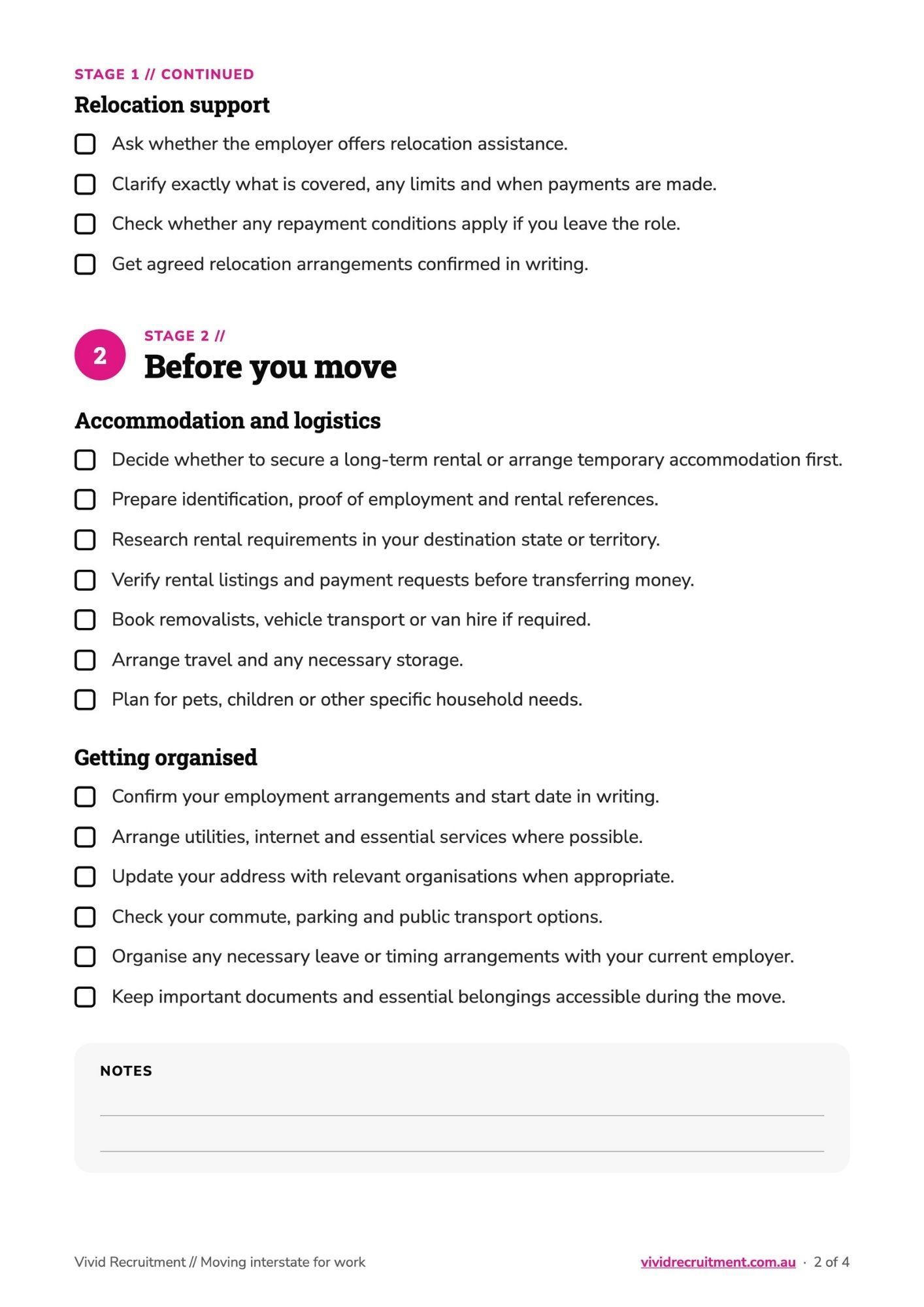
Your interstate relocation checklist
Before you commit to the move, work through this checklist and download our "Moving interstate for work - Your practical relocation checklist" below.
Before accepting the role
- Understand the role, salary, benefits and employment conditions.
- Research the job market and longer-term opportunities in your destination city.
- Compare your expected income with the cost of living.
- Estimate the total cost of relocating.
- Ask whether relocation assistance is available.
- Discuss the move with anyone else affected by the decision.
Before moving
- Confirm your employment details and start date in writing.
- Arrange accommodation or a realistic short-term housing plan.
- Prepare rental application documents.
- Book travel and removalists, if required.
- Organise utilities, internet, storage and other practical arrangements.
- Plan your commute to work.
- Keep a financial buffer for unexpected costs.
Once you've arrived
- Familiarise yourself with your new neighbourhood and commute.
- Finalise utilities, registrations and other outstanding arrangements.
- Review your budget against your actual living expenses.
- Start building your local social and professional network.
- Give yourself time to settle into your new role and surroundings.



Frequently asked questions
Is it worth moving interstate for a job?
It can be, particularly if the role offers career progression, valuable project experience or access to opportunities that aren't readily available in your current market. The decision should also account for your finances, personal circumstances and longer-term goals.
Should I find accommodation before moving interstate?
If possible, arrange accommodation before you arrive. However, securing a long-term rental from another city can be challenging. Temporary accommodation may give you time to inspect properties, explore suburbs and make a more informed decision.
Do employers pay relocation costs in Australia?
Some employers offer relocation assistance, but it isn't automatic. Ask about available support before accepting the role and confirm any agreed arrangements in writing.
How much money should I save before relocating?
There's no single figure that suits everyone. Your budget will depend on the destination, accommodation costs, moving arrangements and personal circumstances. Calculate your upfront expenses, allow for ongoing living costs and keep a buffer for unexpected delays or expenses.
What should I ask a recruiter before accepting an interstate role?
Ask about the responsibilities, salary, team, projects, work arrangements, start date and longer-term prospects. You should also discuss relocation assistance, where applicable, and raise any concerns about moving before making a commitment.
Thinking about an interstate move?
A new city can bring new opportunities, but it's worth taking the time to understand the role and the practicalities before making the leap.
At Vivid Recruitment, we work with architecture, interior design, engineering and planning professionals across Australian markets.
Nick and Lee can talk you through the opportunities they're working on, what a role involves and the questions worth asking before making your next career move.
If you're considering a move interstate, or simply want to understand what's happening in another market, get in touch.
Good roles with good businesses. Clear and Simple.