AI can screen a CV. But can it actually recruit someone?
About the Authors
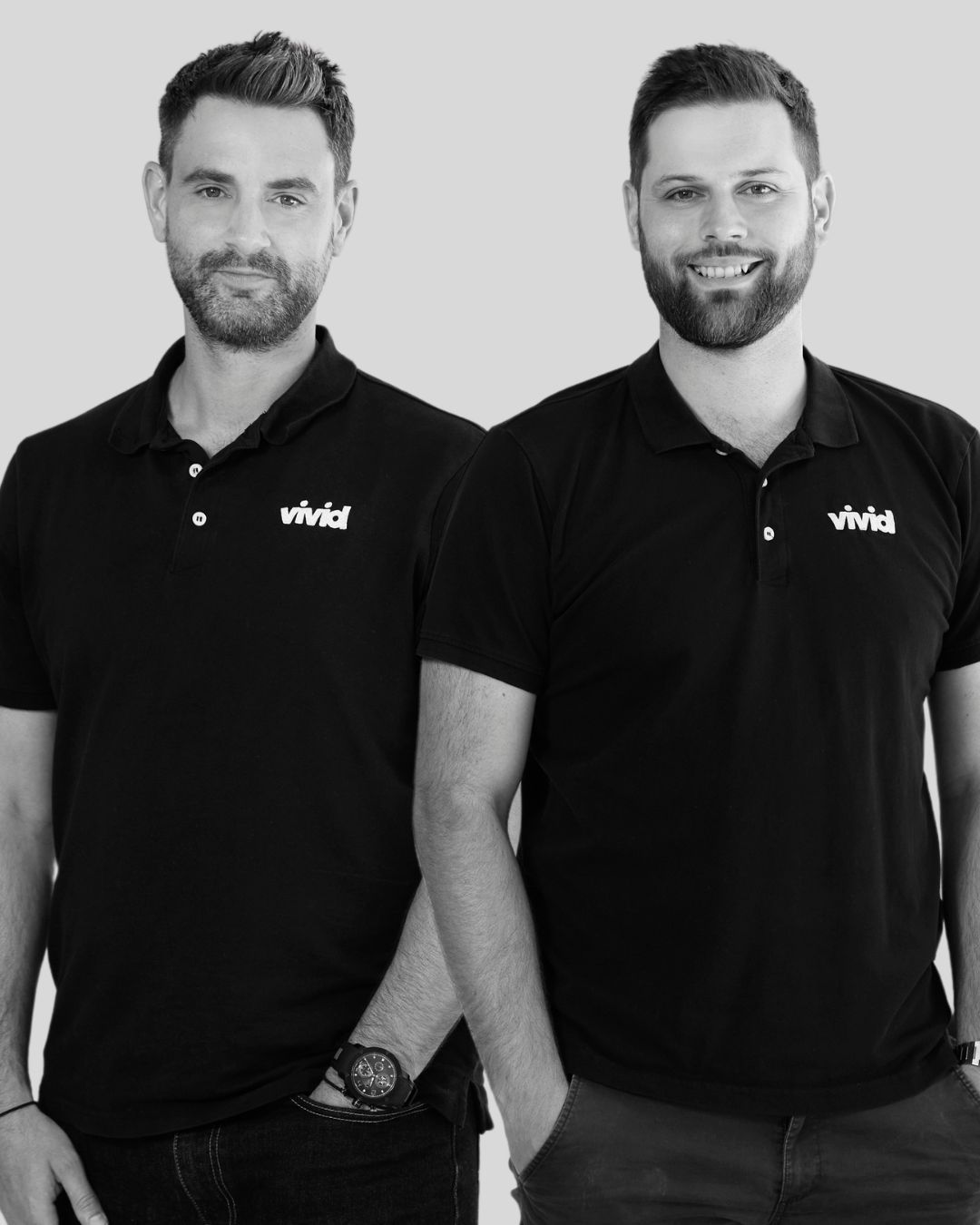
Nick Koop
Director
(Building Services Engineering)
Nick specialises in building services recruitment across Australia, with a focus on mechanical, electrical, and fire engineering. He works closely with consultancies delivering major healthcare, infrastructure, and commercial projects, and has a strong track record placing senior engineers into technically demanding roles. Known for being straight-up and reliable, Nick spends most of his time in the detail, not the sales pitch.
Lee Stevens
Director
(Architecture & Design)
Lee is one of the founders of Vivid Recruitment and focuses on architecture and design studios across Australia. With years of experience working closely with directors and senior hires, he’s built long-term relationships based on trust and consistency. Lee’s approach is simple: understand what a business actually needs, cut out the noise, and get the right people in place without the usual recruitment carry-on.
Contact Nick and Lee
Nicholas Koop, Principal Recruitment Consultant, Engineering & Planning -
📧 nick@vividrecruitment.com.au
Lee Stevens, Principal Recruitment Consultant, Architecture & Design -
You can also connect with Lee on LinkedIn and Nick on LinkedIn or follow the Vivid Recruitment LinkedIn page for more industry insights, news, jobs and general chit chat and tips!
The short version
AI is changing recruitment, and there are plenty of good reasons to use it. It can save time, sort information, and help recruiters and employers get through large volumes of applications.
But there is a pretty big difference between screening a candidate and understanding a candidate.
At Vivid, we don't use AI to vet or shortlist our candidates. Every person we put forward has been reviewed by a human who understands the role, the business, the market and, importantly, the person behind the CV.
Because recruitment isn't just about whether someone's experience matches a list of keywords. It's about whether they're actually right for the role, the team and the business.
And you can't get all of that from a CV.
Is AI going to decide who gets a job?
This is a question we're hearing more often.
AI is already being used across recruitment. Depending on the employer and the system, it can be used to scan CVs, identify keywords, rank applications, analyse written responses and, in some cases, help determine who progresses to the next stage.
On paper, it makes sense.
Recruiters and hiring managers are busy. Large organisations can receive hundreds, sometimes thousands, of applications for one role. If technology can quickly narrow that down, why wouldn't you use it?
The problem starts when screening becomes the decision.
A CV is a useful starting point. It tells you where someone has worked, what they've studied and what they've been involved in.
- It doesn't tell you everything.
- It doesn't tell you whether someone is actually interested in the role.
- It doesn't tell you what they are like to work with.
- It doesn't tell you why they left their last job.
- It doesn't tell you whether they're looking for more responsibility, a better project, a change of environment or simply a business where they can see themselves staying for the next five years.
- And it certainly doesn't tell you whether they'll fit into the team.
That's where recruitment needs a human being.
AI is a useful tool. It isn't a recruiter.
We're not anti-AI. Far from it.
There are plenty of parts of recruitment where AI can be useful.
It can help with administration. It can organise information. It can make sense of large amounts of data. It can help write a first draft of a job advertisement or make repetitive processes quicker.
Used properly, that's a good thing.
But there is a difference between using AI to assist a recruiter and using AI to be the recruiter.
Australian government recruitment guidance is increasingly making that distinction too. The Australian Public Service Commission's 2026 principles for AI in recruitment emphasise human-centred oversight and decision-making, with AI assisting rather than replacing human judgement at important stages of recruitment.
That's important because hiring someone isn't a particularly good place to make decisions based solely on pattern recognition.
You need context.
So what does Vivid actually do?
This is where we think there is a bit of a misconception about recruitment agencies.
Someone sends us a CV.
We don't throw it into a system and wait for a score.
We actually look at it.
Then we speak to the person.
We want to understand their experience, what they've been working on, what they want next and what is important to them.
We also know the roles we're recruiting for.
Our consultants work specifically across Architecture, Interior Design, Engineering, Planning and Pre-construction. That specialist knowledge matters because we're not simply matching job titles.
An Architect isn't just an Architect.
An Engineer isn't just an Engineer.
Two people can have almost identical CVs and be completely different candidates for the same role.
One might have the right technical experience but be looking for a completely different type of business.
Another might have slightly less experience on paper but have worked on exactly the type of project the client is about to start.
Someone else might be perfect for the role but be completely unwilling to make the commute.
And another candidate might be the right person technically, but be looking for a level of flexibility the business can't offer.
None of that is particularly easy to pick up from a keyword search.
It's certainly not something we'd want a computer deciding for us.
The bit you can't put on a CV
One of the biggest factors in a successful hire is fit.
Not the vague, corporate version of "culture fit".
We're talking about whether the person and the business genuinely make sense together.
- How does the team work?
- What is the manager like?
- How much autonomy does the role have?
- Is the business collaborative or more individual?
- Is someone looking for stability or rapid progression?
- Will they actually enjoy the work?
- What is the office environment like?
- What does the client really need from this person?
- And what does the candidate really want from their next move?
These are conversations.
They aren't checkboxes.
They are also the reason we spend time talking to both sides of the recruitment process.
Our job isn't simply to find someone who looks good on paper and send their CV across.
It's to understand enough about both parties to know whether introducing them makes sense.
Sometimes that means putting someone forward.
Sometimes it means telling a candidate that a role probably isn't right for them.
And sometimes it means telling a client that the person they initially described isn't necessarily the person they actually need.
That's recruitment.
There is another problem with automated screening
There is also a bigger question around what happens when AI gets the first cut wrong.
Research into AI hiring systems in Australia has raised concerns that automated recruitment can reproduce or amplify existing biases, particularly when systems are trained on historical recruitment data or rely on proxies that don't genuinely relate to someone's ability to do the job.
That's not to say that human recruitment is automatically unbiased. It isn't.
Humans have biases too.
The difference is that a good recruiter can question their own assumptions, ask another question, pick up something unexpected and change their mind.
A candidate can explain the gap in their CV.
- They can tell you why they've moved between sectors.
- They can explain that their job title doesn't really reflect what they've been doing.
- They can tell you about the project they're proudest of.
- They can tell you what they actually want next.
A good recruitment process gives people the opportunity to do that.
What does this mean for candidates?
If you're applying for jobs at the moment, it's worth asking how your application is actually being assessed.
- Is a human reviewing your CV?
- Is someone going to speak to you?
- Does the recruiter or hiring manager understand the role they're recruiting for?
- And will you have an opportunity to explain your experience beyond what's written on two or three pages?
You shouldn't need to try to "beat" an AI system with the perfect combination of keywords.
Your experience should speak for itself.
That's one of the reasons we believe specialist recruitment still has a place, particularly in industries where experience, technical knowledge and relationships matter.
We're not going back to recruitment without technology
And we don't think we should.
AI will continue to become part of recruitment. It should.
There are plenty of things technology can do faster and, in some cases, better than a human.
But the final decision about whether someone is right for a role shouldn't be reduced to whether an algorithm thinks their CV looks like someone else's.
At Vivid, we'll keep using technology where it makes sense.
But when it comes to our candidates, we'll still pick up the phone.
We'll still ask questions.
We'll still talk to our clients.
And we'll still make the judgement call.
Because AI can screen a CV. It can't replace knowing people.
That's the bit that still matters.
Frequently Asked Questions
Does Vivid use AI to screen candidates?
No. Vivid does not use AI to vet or shortlist candidates. Our consultants personally review candidates, speak with them about their experience and understand what they're looking for before putting them forward to a client.
Can AI be useful in recruitment?
Yes. AI can be useful for administrative tasks, organising information, drafting content and supporting recruiters with repetitive work. The issue isn't whether AI has a place in recruitment. It's how it is used and whether humans remain responsible for important hiring decisions.
Can AI assess culture fit?
Not reliably on its own. Culture, team dynamics, management style, communication and personal preferences are difficult to understand from a CV or automated assessment. These things require conversation and context.
Does AI make recruitment fairer?
It can, but it can also introduce or reinforce bias. The outcome depends on how the technology has been designed, what data it has been trained on and how much human oversight is involved. Australian guidance on AI-assisted recruitment increasingly stresses the importance of human oversight and fair, merit-based decision-making.
Why use a specialist recruitment agency if businesses can use AI?
Because recruitment isn't simply about finding people who meet a list of requirements. A specialist recruiter brings knowledge of the market, access to candidates, an understanding of the client and, importantly, the conversations needed to work out whether the opportunity actually makes sense for both sides.
That's the part technology can't do for you.