Iconic Australian Architects You Should Know About

Vivid Recruitment • December 2, 2024

Australia’s architecture is as diverse as its landscapes, blending innovation, sustainability, and cultural storytelling. Behind the country’s most iconic structures are architects whose visions have shaped the skyline, redefined urban spaces, and put Australia on the global architectural map.


Let’s dive into the lives and legacies of some of Australia’s most renowned architects and the contributions that made them icons.


1. Glenn Murcutt

“Touch the Earth Lightly”


When it comes to Australian architecture, Glenn Murcutt is a household name. Known for his minimalist and sustainable designs, Murcutt’s work is deeply rooted in Australia’s environment and culture.


Signature Style:

  • Lightweight materials like corrugated iron.
  • Designs that respond to the natural environment.
  • Focus on passive environmental control (natural ventilation, solar orientation).


Iconic Projects:

  • Marie Short House (1974–1975): A celebration of rural Australia.
  • Arthur and Yvonne Boyd Education Centre (1999): A masterpiece in harmony with its surroundings.


Murcutt is also Australia’s only recipient of the prestigious Pritzker Architecture Prize (2002), cementing his place as a global icon.


2. Jørn Utzon

The Visionary Behind the Sydney Opera House


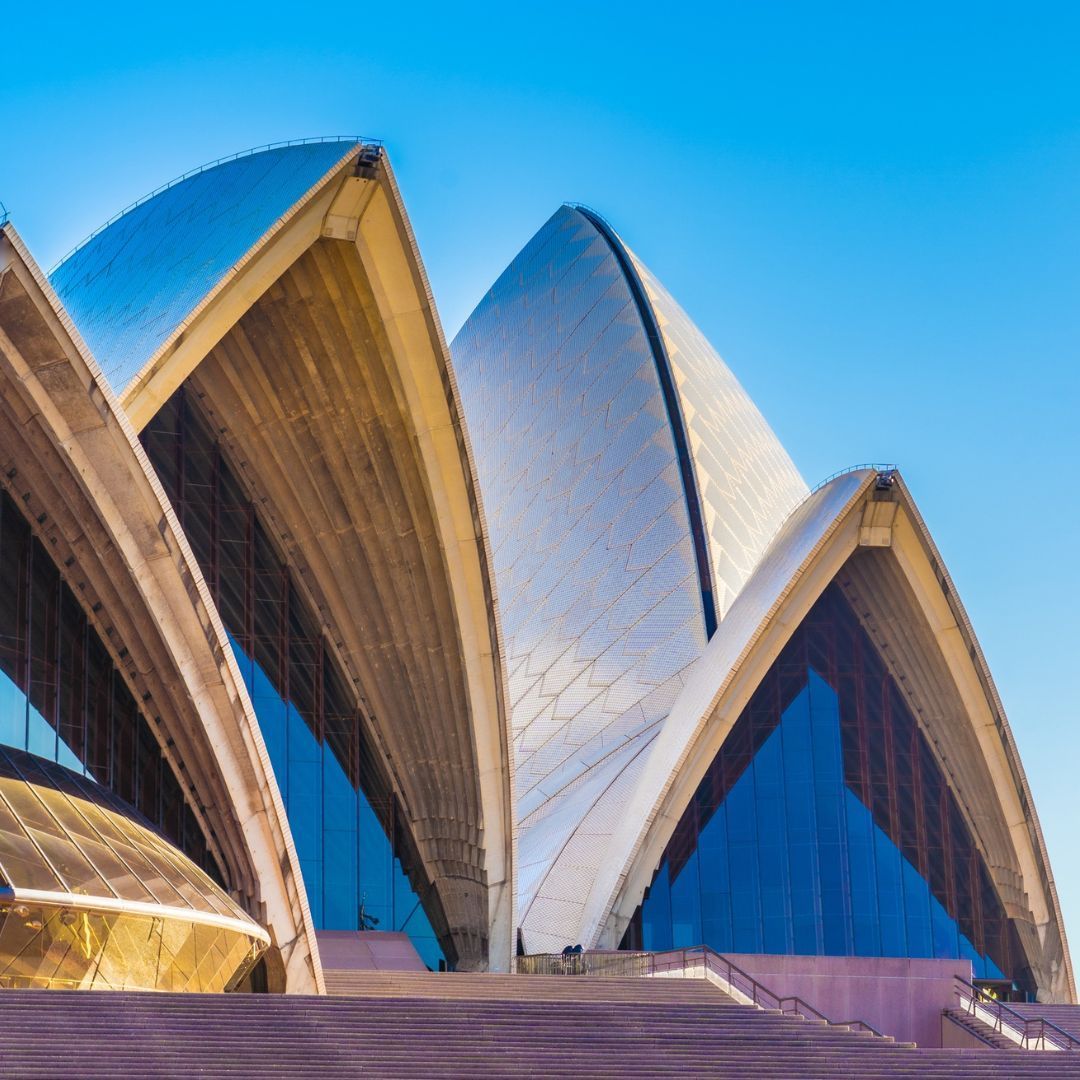
While Danish by birth, Jørn Utzon’s contribution to Australian architecture is unmatched. The Sydney Opera House is not just a building—it’s a symbol of Australia’s cultural identity.


Key Facts:

  • Construction began in 1957 but faced significant delays and controversies, leading to Utzon’s resignation from the project.
  • Despite not overseeing its completion, his design remains one of the most recognisable in the world.


The Opera House was listed as a UNESCO World Heritage Site in 2007, a testament to Utzon’s genius.


3. Harry Seidler

Modernism Pioneer


Harry Seidler brought Bauhaus-inspired modernism to Australia, revolutionising the way we think about urban living and design. His work introduced bold geometry, innovative materials, and a focus on functional spaces.


Signature Projects:

  • Australia Square Tower (1967): Sydney’s first true skyscraper.
  • Rose Seidler House (1948–1950): A prime example of post-war modernist architecture.


Seidler’s legacy continues to influence urban planning and modern architectural aesthetics in Australia.


4. Marion Mahony Griffin

The Woman Who Shaped Canberra


Marion Mahony Griffin, alongside her husband Walter Burley Griffin, co-designed Australia’s capital city, Canberra. Her contributions often go uncredited, but her artistic talent and design vision were instrumental in bringing Canberra to life.


Notable Contributions:

  • Canberra Master Plan (1913): A groundbreaking design inspired by geometry and natural landscapes.
  • Castlecrag Suburb, Sydney: A planned community integrating architecture with nature.


Griffin’s innovative work remains a cornerstone of urban planning in Australia.


5. John Wardle

Champion of Contemporary Design


John Wardle is a contemporary icon whose projects seamlessly blend craft, context, and creativity. As the founder of John Wardle Architects, he has worked on everything from residential projects to cultural landmarks.


Notable Works:

  • Ian Potter Southbank Centre (2019): A dynamic hub for Melbourne’s arts community.
  • Phoenix Apartments (2013): A striking addition to Melbourne’s cityscape.


Wardle’s work often incorporates local materials and craftsmanship, creating spaces that feel personal and timeless.


6. Murcutt, Lewin & Lark

The Dynamic Trio


The collaboration of Glenn Murcutt, Wendy Lewin, and Reg Lark resulted in one of Australia’s most celebrated architectural projects: the Arthur and Yvonne Boyd Education Centre.


This trio exemplified the power of collaboration, creating a structure that is both environmentally sensitive and artistically profound.


7. Richard Leplastrier

Master of Small-Scale Wonders


Richard Leplastrier’s work focuses on small-scale, deeply personal projects. Inspired by traditional Japanese architecture and Australia’s natural landscapes, his designs are intimate and environmentally conscious.


Key Projects:

  • Palm Garden House (1993): A serene retreat that blurs the line between indoors and outdoors.
  • Lovett Bay House (1994): A timber masterpiece nestled in the bushland.


Leplastrier’s approach to architecture highlights the beauty of simplicity and the importance of living harmoniously with nature.


8. Philip Cox

Pioneer of Sustainable Design


Philip Cox is celebrated for his environmentally conscious designs and large-scale projects that often reimagine public spaces.


Notable Projects:

  • Sydney Football Stadium (1988): A landmark in Australian sports architecture.
  • National Maritime Museum, Sydney (1991): A stunning example of cultural infrastructure.


Cox’s work reflects a commitment to sustainability and community-focused design.


Conclusion


Australia’s architects have not only shaped the country’s physical landscape but also contributed to global conversations on sustainability, urbanism, and cultural identity. From pioneers like Harry Seidler to contemporary visionaries like John Wardle, their work is a testament to the transformative power of design.


Whether you’re an architecture enthusiast or an aspiring architect, these trailblazers are worth knowing—and celebrating—for their immense contributions.


Which architect inspires you the most? Let us know.

By Lee Stevens August 31, 2026
About the Author Lee Stevens, Director Lee has over 15+ years’ experience across Architecture, Design, and Planning, working with boutique studios through to global consultancies. He’s built his network on straight-talking advice and long-term relationships, not sales tactics. Originally from the UK, Lee moved to Melbourne in 2014 and now balances recruitment with family life, coaching football, and keeping up with his kids and their very energetic cocker spaniel. Contact Lee Want to discuss your next role? Contact Lee Stevens , Principal Recruitment Consultant, Architecture & Design - 📲 0406 470 020 📧 lee@vividrecruitment.com.au You can also connect with Lee on LinkedIn or follow the Vivid Recruitment LinkedIn page for more industry insights, news, jobs and general chit chat and tips!
Bright neon sign reading “BRISBANE” inside a warmly lit bar or restaurant
By Nick Koop August 24, 2026
About the Author Nick Koop, Director With more than 11+ years of recruitment experience, Nick specialises in engineering recruitment across Australia. He has built strong relationships with everyone from boutique consultancies and start-ups through to global engineering firms, earning a reputation for honesty, transparency and doing what he says he'll do. Born and bred in Melbourne, Nick spends most weekends watching sport, chasing after his young kids, Louey and Odie, or finding an excuse to support a local pub with a well-earned pint. Contact Nick Want to discuss your next engineering hire? Give Nick a buzz or drop him a line via: 📲 0426 180 254 📧 nick@vividrecruitment.com.au You can also connect with Nick on LinkedIn or follow the Vivid Recruitment LinkedIn page for more industry insights, news, jobs and general chit chat and tips!
Sydney Opera House sails against a bright blue sky
By Lee Stevens August 18, 2026
The short answer As 2027 nudges closer, Australian architecture firms are looking beyond impressive portfolios and job titles. They want people who can genuinely deliver projects, with strong documentation and BIM capability, solid project experience and the ability to communicate confidently with clients and consultants. At the same time, firms are becoming more considered about when and how they hire. Project pipelines, regional market conditions and the growing importance of flexibility are all influencing recruitment decisions. For architecture practices, the message is fairly simple: know exactly what you need, understand what the market can realistically provide and make sure your offer gives good people a reason to choose you. The role of the recruiter is changing too. Increasingly, firms need a specialist who can provide market intelligence, realistic salary benchmarking, insight into talent availability and advice on whether a permanent, contract or alternative recruitment approach makes the most sense. That's what we're seeing across the Australian architecture market as we look towards 2027. Delivery over dazzle This is probably the biggest shift we're seeing. A good portfolio still matters. A strong interview still matters. Experience and design ability obviously matter. But firms are becoming much more focused on what happens after the interview. Can this person actually deliver a project? Can they produce and coordinate documentation? Are they confident working in a BIM environment? Do they understand what happens as a project moves towards construction? Can they communicate with clients and consultants and hold their own in those conversations? There is a genuine concern among some practices about hiring someone who interviews beautifully, has an impressive portfolio and looks great on paper, only to discover that they can't actually get a job through to construction issue. That is why we're seeing more emphasis on genuine delivery capability. The conversation is moving away from simply asking, "What projects have you worked on?" It's becoming more about "What was your role on that project, and what did you actually deliver?" That's an important distinction. Documentation and BIM capability matter Design experience will always be important in architecture, but the ability to take that design thinking and turn it into a well-documented, coordinated and deliverable project is carrying real weight. Strong documentation skills and BIM competency continue to be sought after, particularly for practices that need people who can contribute to live projects without requiring significant support to get up to speed. This isn't about saying every architect needs to be a BIM specialist. It is about understanding the tools and processes being used within the practice and being able to work effectively within them. For clients, this means being clear about what they actually need before they start recruiting. A "Project Architect" in one practice can have a very different role from a "Project Architect" in another. One might be heavily involved in design and client presentations, while another could be responsible for documentation, consultant coordination and delivery. The title doesn't tell you enough. The detail does. Hiring is becoming more cautious We're also seeing less of the old urgency around recruitment. That doesn't mean firms aren't hiring. They are. But rather than automatically rushing to fill a vacancy, more practices are looking at their project pipeline and thinking carefully about what they are likely to need over the next six to twelve months. That caution makes sense. Projects get delayed. Feasibilities change. New work can take longer to commence than expected. A practice can be busy one month and suddenly find itself looking at a different pipeline a few months later. As a result, we're seeing more conversations around building talent pipelines and keeping good people on the radar rather than waiting until a vacancy becomes critical. Fixed-term and contract appointments are also becoming a more useful option for some practices, particularly where there is a need for additional capability but less certainty around the longer-term pipeline. For clients, that means the recruitment conversation shouldn't necessarily start with, "We need a permanent person." It should start with, "What do we actually need, and for how long?" There isn't one Australian architecture market This is another area where I think local knowledge makes a real difference. Brisbane, Melbourne and Sydney are not operating in exactly the same market. Brisbane is currently running hot, with Queensland's broader economic momentum and the infrastructure and development activity associated with the 2032 Olympics contributing to demand. We're seeing particular interest in experienced Project Architects and people who can step into projects and deliver. Melbourne is active, but more measured. Sydney is active too, but we're seeing a different level of caution around project pipelines and hiring decisions. That regional nuance matters when you're recruiting. Salary expectations aren't necessarily the same. Candidate availability isn't necessarily the same. The types of projects driving demand aren't necessarily the same. So a one-size-fits-all recruitment strategy doesn't really work anymore. If you're hiring in Brisbane, you need someone who understands Brisbane. If you're hiring in Melbourne, you need someone who understands Melbourne. It sounds obvious, but it is surprisingly easy to lose sight of when recruitment becomes a numbers game. Flexibility is now part of the offer Salary is still important. Nobody is suggesting otherwise. But it is increasingly only one part of the conversation. When I'm talking to candidates, work-life balance , flexibility , culture, leadership and the type of work they're going to be doing are regularly part of the decision. For some people, salary will still be the deciding factor. For others, a better working arrangement or the opportunity to work on the right projects can be just as important. The smarter practices are recognising that. If you're struggling to attract good people, simply increasing the salary isn't always the answer. Sometimes the question should be: What else are we offering? And equally, what are we asking people to give up to come and work for us ? That's an important conversation for employers to have as we head into 2027. What do architecture firms actually want from a recruiter? This is probably the question I would encourage clients to ask when choosing a recruitment partner . Because I don't think most architecture practices need another person sending them CVs. They need someone who understands the sector. Someone who knows the difference between a good portfolio and genuine project experience. Someone who understands salary expectations and can benchmark a role against the current market. Someone who can tell them when a particular skill set is difficult to find. Someone who is responsive. And, importantly, someone who is prepared to tell them when their brief isn't realistic. That last one is important. A good recruiter shouldn't just agree with everything a client asks for. If the combination of salary, experience, software capability, project sector and location makes a role incredibly difficult to fill, the client needs to know that before they spend weeks looking for someone who doesn't exist. That's where market intelligence becomes valuable. Recruitment is becoming more of an advisory relationship I think this is where recruitment is heading. The best client relationships are becoming less transactional and more advisory. The value isn't simply in finding a candidate. It's in understanding the market well enough to help a client make a better hiring decision. Is the salary competitive? Is the level of experience realistic? Is that skill set actually available in this location? Would a contract appointment make more sense? Should the role be structured differently? Are candidates going to be attracted to what we're offering? These are conversations that should happen before the job advertisement goes live, not after three weeks of getting nowhere. A specialist recruiter should be able to bring that information to the table. So, what should architecture firms be thinking about for 2027? I don't think 2027 is going to be about one big recruitment trend. It is going to be about being more considered. Firms will still need good architects, designers and project professionals. But they are likely to be more selective about who they bring into the business and more conscious of how that person fits into their actual project pipeline. Candidates will continue to look beyond salary. Regional differences will continue to matter. Technical and delivery capability will continue to carry weight. And firms that understand what they need, move quickly when the right person becomes available and offer something that candidates genuinely value will put themselves in a much stronger position. For me, the biggest change is simple. Recruitment is no longer just about filling a vacancy. It's about understanding the market well enough to make the right hiring decision. That's what we try to bring to our client relationships at Vivid . We work exclusively across Architecture, Interior Design , Planning and Engineering , so our conversations aren't based on what we've found on a job board that morning. They're based on the people we're speaking to, the practices we're working with and what we're seeing across the market. If you're thinking about your architecture hiring for the remainder of 2026 or planning ahead for 2027, we're always happy to have a conversation about what we're seeing. No hard sell. Just an honest conversation about the market and what is likely to work.
Woman at desk looking confused, holding a calculator against an orange background.
By Nick Koop and Lee Stevens August 10, 2026
Salary matters when hiring & retaining built environment professionals. We look at the real cost of getting salary wrong across architecture, engineering & planning.
Hand placing a gold egg between two white eggs on a blue background
By Nick Koop August 3, 2026
Recruitment conversations often start with a salary range. "What's the market rate for this role?" "Can we find someone with these skills within this budget?"
Vivid x New Chapter Talent logo above two smiling people on a bright yellow background
By Vivid Recruitment July 16, 2026
As Architecture and Interior Design practices continue to compete for high-quality projects, marketing has become far more than a support function. From producing compelling bids and submissions to strengthening brand presence, creating engaging content and building lasting client relationships, the right marketing professional can have a significant impact on the growth of a practice. Yet finding experienced marketing talent with an understanding of the Architecture and Design industry isn't always easy.  The Growing Importance of Marketing in Architecture
Confused person with hands raised against a purple background
By Lee Stevens July 2, 2026
Thinking about accepting a counter offer? Learn what to consider before making a decision, common mistakes to avoid and expert advice from Vivid Recruitment.
Bold black “why vivid?” text on a bright yellow wall with a person walking by
By Vivid Recruitment June 22, 2026
About the Authors Nick Koop Director (Building Services Engineering) Nick specialises in building services recruitment across Australia, with a focus on mechanical, electrical, and fire engineering. He works closely with consultancies delivering major healthcare, infrastructure, and commercial projects, and has a strong track record placing senior engineers into technically demanding roles. Known for being straight-up and reliable, Nick spends most of his time in the detail, not the sales pitch. Lee Stevens Director (Architecture & Design) Lee is one of the founders of Vivid Recruitment and focuses on architecture and design studios across Australia. With years of experience working closely with directors and senior hires, he’s built long-term relationships based on trust and consistency. Lee’s approach is simple: understand what a business actually needs, cut out the noise, and get the right people in place without the usual recruitment carry-on. Contact Nick and Lee Nicholas Koop , Principal Recruitment Consultant, Engineering & Planning - 📲 0426 180 254 📧 nick@vividrecruitment.com.au Lee Stevens , Principal Recruitment Consultant, Architecture & Design - 📲 0406 470 020 📧 lee@vividrecruitment.com.au You can also connect with Lee on LinkedIn and Nick on LinkedIn or follow the Vivid Recruitment LinkedIn page for more industry insights, news, jobs and general chit chat and tips!
Smiling man in a black polo shirt against a green background
By Nick Koop June 4, 2026
Understand double representation in recruitment & its impact on job opportunities. Get insights for candidates in architecture & engineering.
Chalk words “FACTS” above crossed-out “MYTHS” on a blackboard background.
By Lee Stevens May 20, 2026
About the Author Lee Stevens, Director Lee has over 15 years of local and international recruitment experience across Architecture, Interiors, and Planning. Having worked with boutique studios through to large international consultancies, he’s built a reputation for honest advice, straightforward communication, and long-term relationships across the industry. Based in Melbourne, Lee is also a proud dad, sports fanatic, football coach, and someone who genuinely enjoys seeing good people build meaningful careers in architecture and design. Contact Lee Want to discuss your next role? Contact Lee Stevens , Principal Recruitment Consultant, Architecture & Design - 📲 0406 470 020 📧 lee@vividrecruitment.com.au You can also connect with Lee on LinkedIn or follow the Vivid Recruitment LinkedIn page for more industry insights, news, jobs and general chit chat and tips!